When does climate concern translate into a Green vote?
A voter might worry about climate change and still oppose a higher tax on petrol. What happens at the ballot box when those views pull in different directions? On her Q-Step placement at the University of Edinburgh, Macy Johns worked with Dr Christos Vrakopoulos to investigate that question across Western Europe.
Putting the surveys together
The project, The Left Divide and the Environmental Cleavage, compared support for Green, centre-left and far-left parties. Macy used R to clean and combine two rounds of the European Social Survey (ESS 10 and 11) with CRONOS-3, a panel survey of people recruited through the ESS. The panel asked more detailed questions about climate policy. Bringing the surveys together let her examine people’s concern about climate change alongside their views on what they were willing to pay for action.
What Macy found
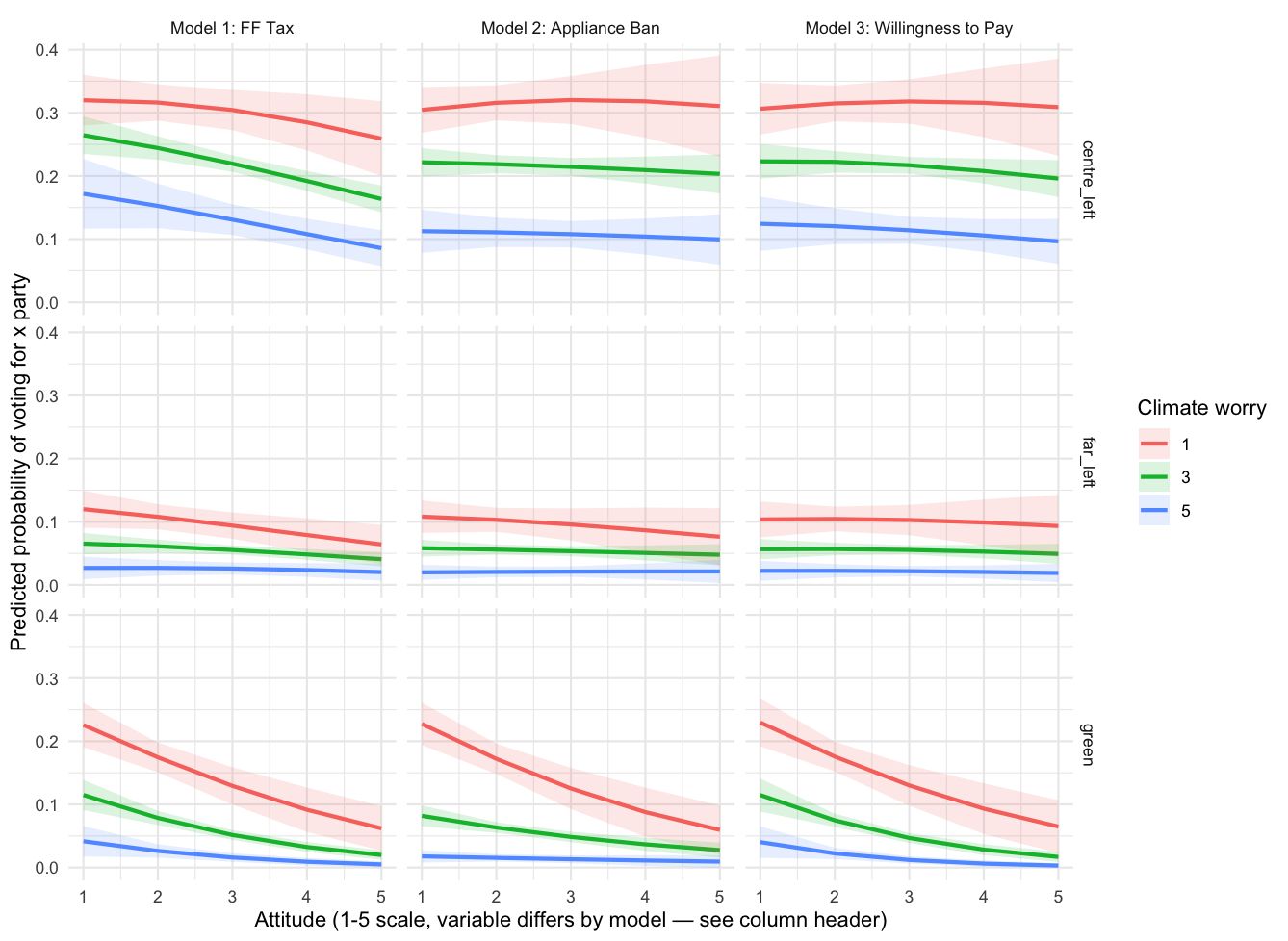
In Macy’s preliminary analysis, people who opposed higher fossil fuel taxes, appliance bans or paying more for climate action were less likely to vote Green. For centre-left parties, the particular policy mattered. Support varied with views on fossil fuel taxes but stayed fairly steady across views on appliance bans and willingness to pay. For far-left parties, the combination of climate worry and attitudes to cost showed little relationship with support.
Advice for future placement students
Some of the R tasks were new to Macy, and help wasn’t always immediately available. She learned to organise her files and annotate her scripts so she could retrace her steps and others could reproduce her analysis. Her advice is to make use of the mentorship on offer and to try something you’ll want to use again later in your degree.