Q-Step Policy Hack 2026: From data to decisions
Location
Edinburgh Futures Institute (EFI), Room 1.50One afternoon. A £500,000 policy challenge. A room full of ideas.
On 28 October 2026, students gathered at the Edinburgh Futures Institute for the Q-Step Policy Hack, combining data analysis, AI tools and policy thinking to tackle a challenge about youth voting and inequality.
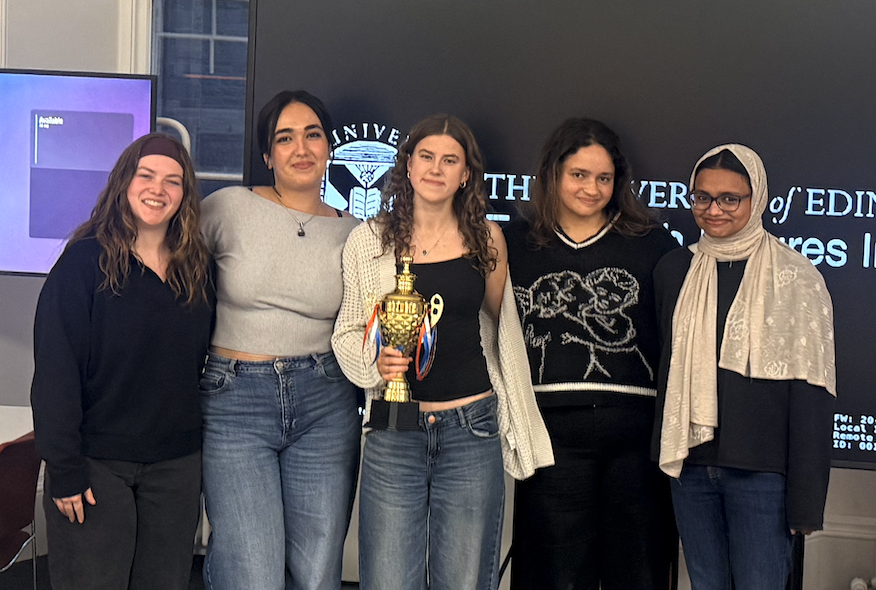
The winning team: Narjis Al-kabbawi, Brighton Nelson, Ella Yates, Amna Ansar and Naila Puri (names not listed in photo order).
The challenge
How would you spend £500,000 to increase youth turnout and reduce the gap in participation between more and less deprived communities? Working in teams, students analysed evidence, weighed competing interventions and built browser-based dashboards to explain their decisions.
The exercise used synthetic teaching data and a simulated budget. The figures shown in the dashboards and photographs do not describe real people or election results.
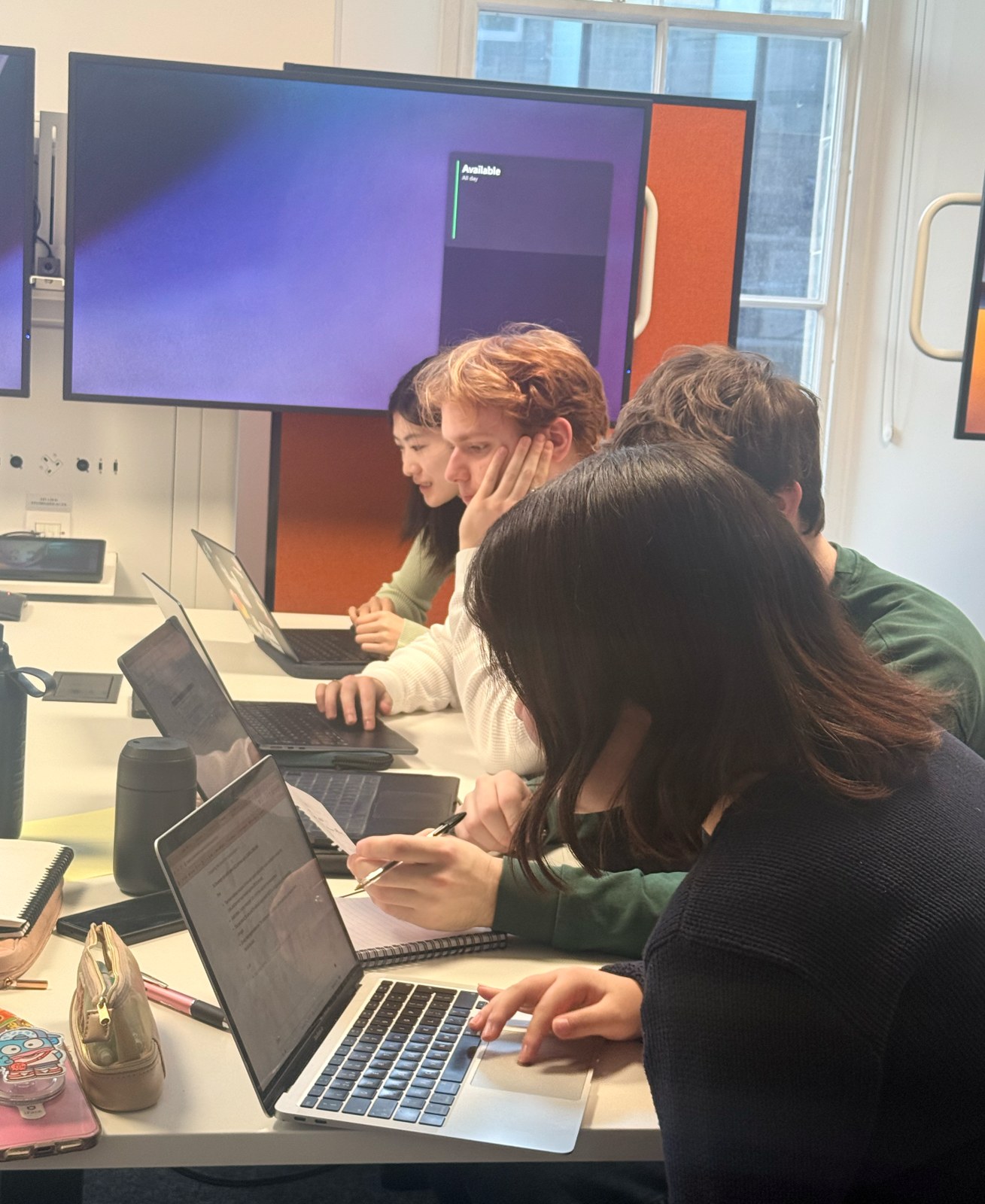
Teams worked together to turn data into a policy recommendation.
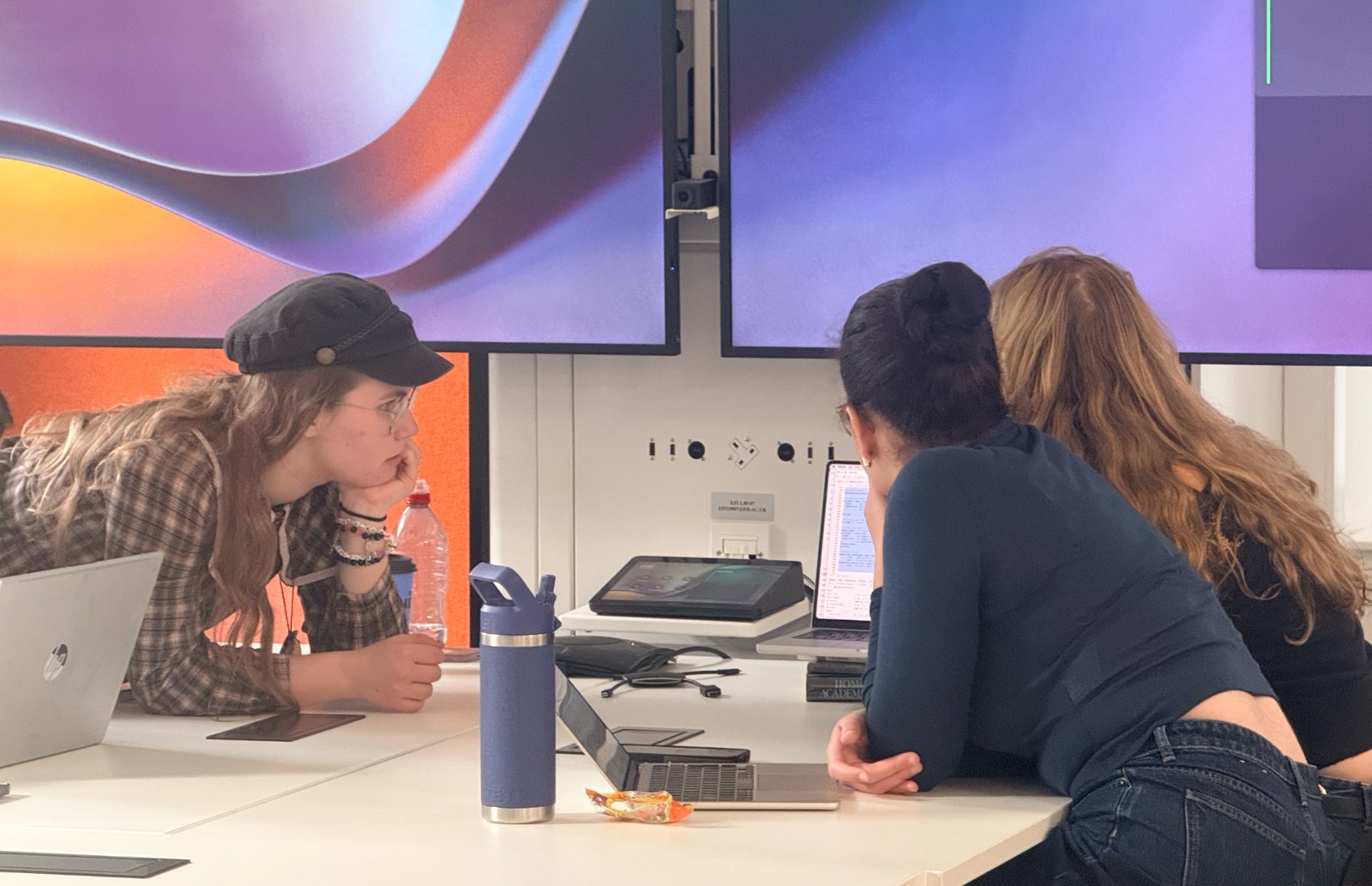
Comparing evidence, questioning assumptions and deciding where the money should go.
From analysis to a three-minute pitch
Each team had three minutes to make its case to the judges. The challenge brought together statistical reasoning, visual communication and the practical task of defending a policy choice under a limited budget.
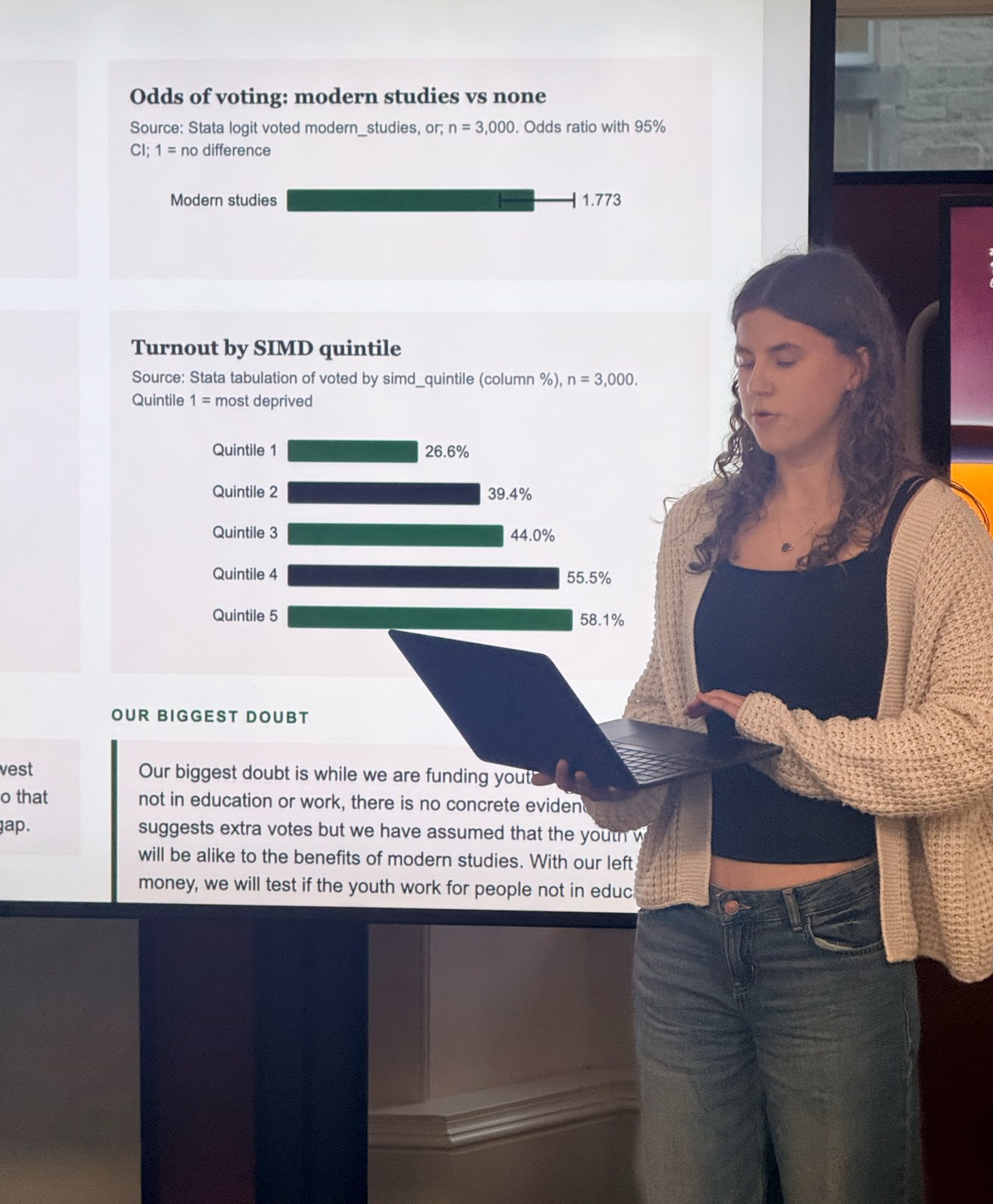
Making the case: students presented their analysis and acknowledged its limitations.
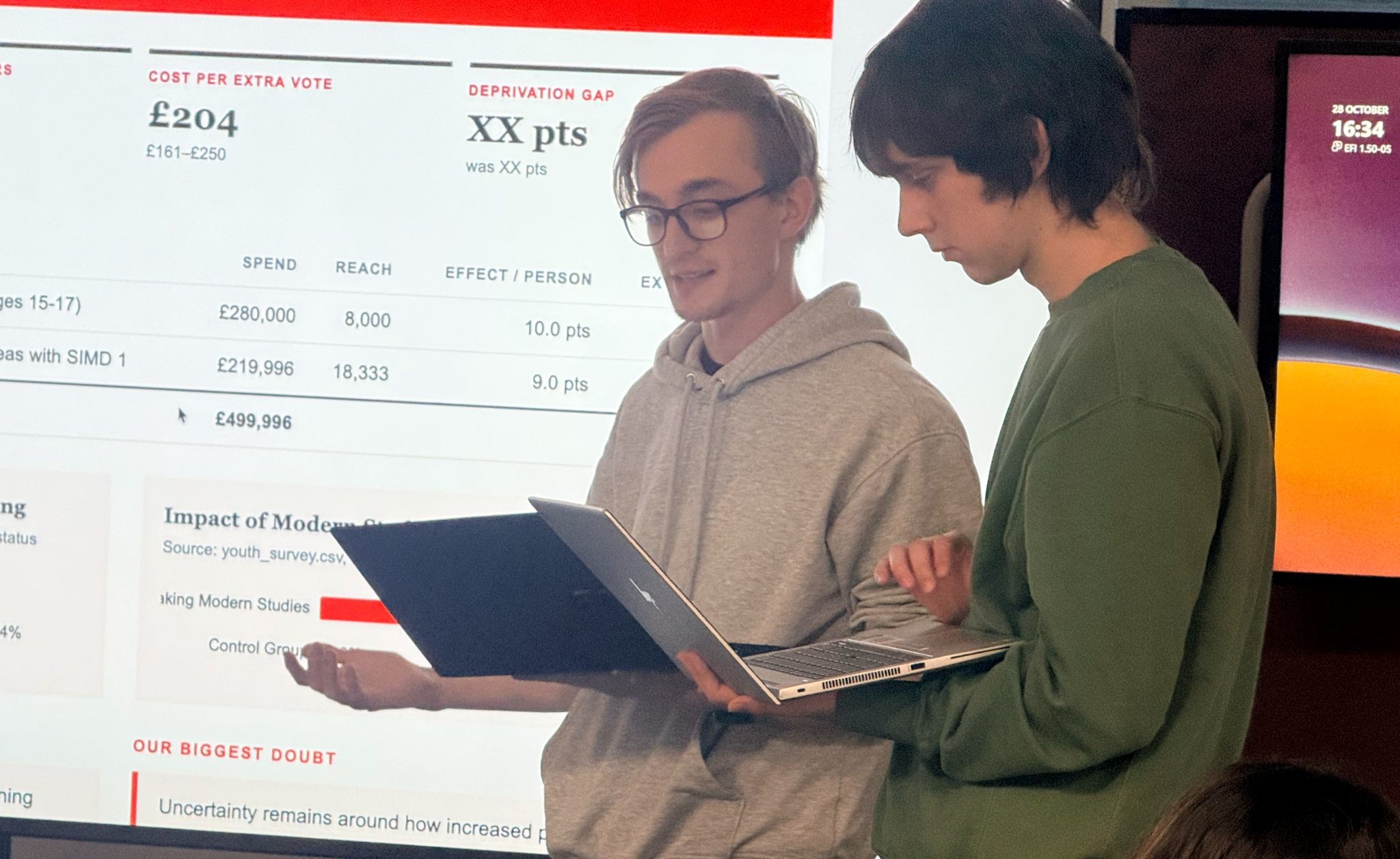
Teams used dashboards to explain spending choices, expected effects and uncertainty.
The winning team
Congratulations to Narjis Al-kabbawi, Brighton Nelson, Ella Yates, Amna Ansar and Naila Puri.
Their proposal prioritised peer doorstep conversations and youth-work outreach in lower-income areas, aiming to narrow inequalities in youth turnout. Their dashboard set out the trade-off between maximising additional votes and reaching communities with lower participation.
The team also acknowledged a key uncertainty: the effect of youth-work outreach on voting was assumed rather than directly established by the evidence provided. They proposed using the remaining budget to test that assumption.
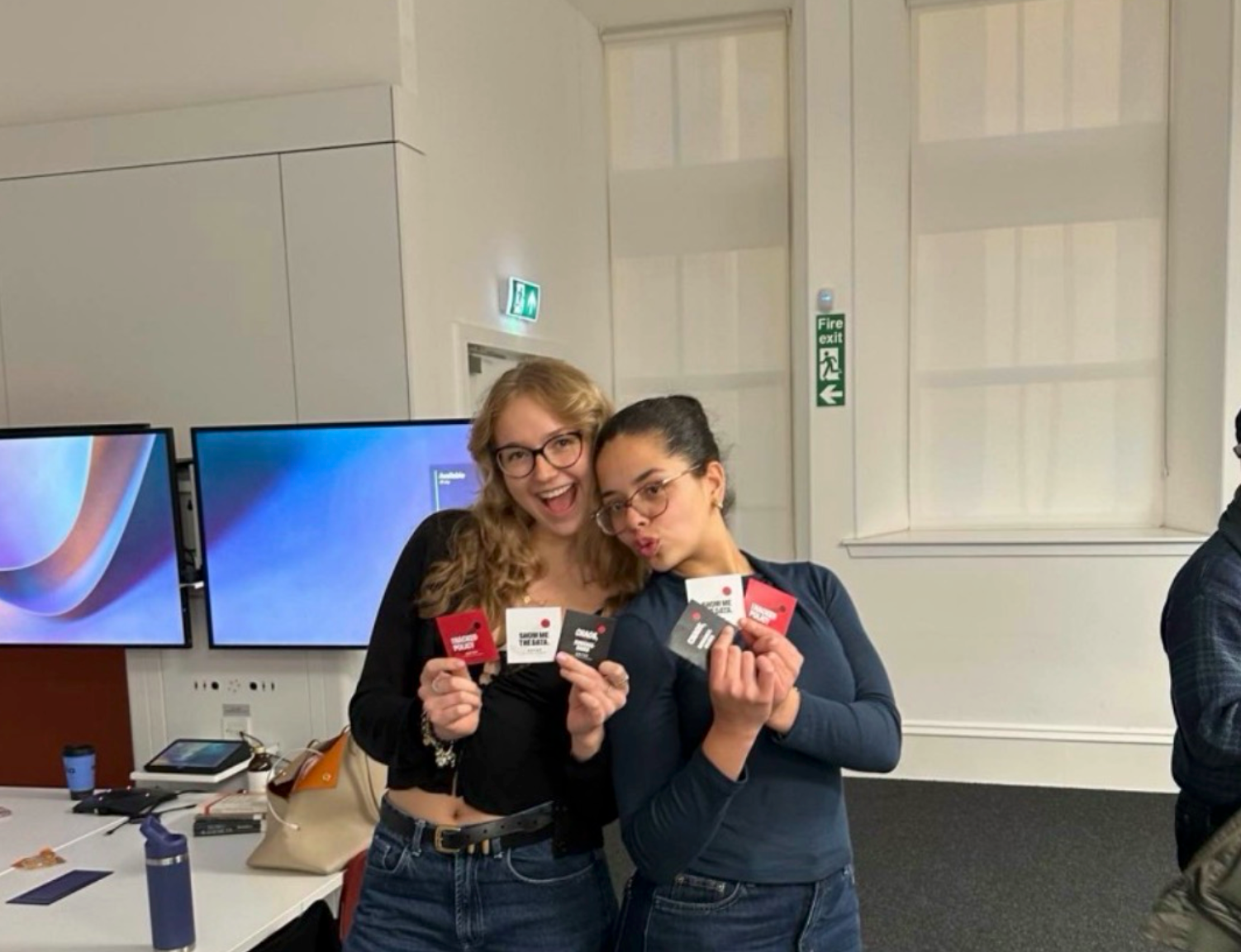
Celebrating an afternoon of teamwork, analysis and policy ideas.
Thank you to our judges
- Andrew Aiton, Scottish Parliament Information Centre (SPICe)
- Christopher Wretman, Senior Lecturer/Associate Professor in Quantitative Research Methods
- Amelia Hodgson, Edinburgh Innovations
- Christos Vrakopoulos, Lecturer (Politics with Quantitative Methods)

The judging panel listening to the teams’ pitches.
Get involved with Q-Step
Interested in using data to understand politics, policy and society? Explore studying with Q-Step or see our upcoming events and workshops. Current students curious about transferring to a quantitative methods degree can contact Adam Chalmers to discuss their options.